Showing posts with label solar leads. Show all posts

Tuesday, 21 January 2025

Vertical Solar Panels are Changing the Game in Snowy Locales

 Installing solar panels flush against rooftops has long been the standard practice. This horizontal approach maximizes sun exposure in regions with consistent sunlight. 


However, in areas that endure snowy winters, this setup has one big weakness. Snow regularly accumulates on flat or angled panels, tanking energy production and creating a maintenance burden for homeowners. 


So what’s the solution? More and more installers are finding that vertical installations hit the sweet spot.

Over Easy Solar

Vertical PVs Defy Low Expectations for Winter Solar

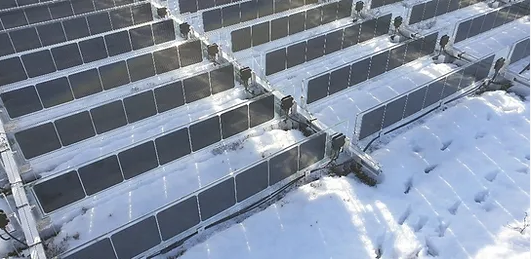
According to PV Magazine, vertical panels perform significantly better under snow-covered conditions. They shed snow efficiently, often avoiding any buildup at all, ensuring that the panels remain exposed to sunlight. 


In fact, their angle is optimal for catching snow-scattered rays.


A study published by the U.S. Department of Energy's Federal Energy Management Program (FEMP) notes that vertical systems capture more sunlight reflected off the snow-covered ground, reflection known as the "albedo effect." Vertical bifacial solar panels, which absorb sunlight on both sides, double that captured energy. This makes vertical panels particularly valuable where snow cover persists for extended periods.


Vertical installations also protect against snow load-induced stress, which can damage conventional rooftop systems – especially when homeowners can’t clear the snow quickly. 

A New Opportunity for Contractors

For solar contractors, offering vertical panels can be the ticket to multiplying sales. Many homeowners in wintry climates feel that they can’t take advantage of solar, believing that panels would be perpetually covered in snow. So they’re left with two scenarios: minimal energy production, or the constant chore of snow clearing. 


With vertical installations, contractors can address these concerns head-on and unlock a previously untapped market. In fact, the Over Easy Solar blog points out that vertical panels not only improve energy efficiency but also minimize roof penetrations, reducing the likelihood of leaks or structural damage. And their presence actually helps speed up the natural thawing process, making snow disappear off rooftops faster. These added benefits are major selling points for cautious homeowners.


Finally, vertical panels open up possibilities for residents whose rooftops aren’t so suitable for installations. Ground or fence-based systems are highly effective and often preferable.

Keep Sales Coming with Exclusive Solar Leads

Contractors looking to maximize their outreach and conversion rates should also consider new strategies for lead generation. Partnering with a reputable lead generation service like Grid Freedom can help contractors connect with homeowners who are legitimate prospects, ready for solar now. Grid Freedom only delivers pre-screened appointments to ensure that contractors spend their time with serious buyers, increasing the likelihood of landing successful installations.


The best way to get solar leads in snowy regions is to target homeowners who are frustrated with high winter energy bills and skeptical about traditional rooftop systems. By offering vertical solar solutions and leveraging Grid Freedom’s services, cold-climate contractors can see much more success in their markets.

Get Quality Solar Leads at GridFreedom.com 


Tuesday, 16 July 2024

Midwest Flooding Brings Widespread Outages - Solar’s Role in the Era of Extreme Weather


Recent bouts of extreme rainfall have unleashed disastrous flooding across the Midwest, extending from Minnesota to

Nebraska and beyond. The severe weather has wrought havoc on communities, resulting in widespread power outages that

left thousands in the dark. 

This season of storms has sparked urgent discussions about the need for stronger power grid infrastructure - and that includes the increasing importance of individual homes having their own source of power behind the meter. Independence from utility companies is becoming a matter of safety, and midwestern contractors are likely to see many new solar leads driven by this motive. 

One Extreme Spring

In June, Minnesota experienced record-breaking flooding. The deluge resulted in the partial failure of the Rapidan Dam,

causing extensive damage to nearby areas and leading to significant power outages. More than 10,000 homes in northern

Minnesota lost electricity. Some residents endured days without power as crews battled against conditions to restore services.

Iowa also faced severe weather, including tornadoes that compounded the damage caused by flooding. The state’s governor, Kim Reynolds, declared a disaster recovery effort, noting the widespread destruction in both urban and rural areas. Thousands of Iowans were left without power, and utility companies were struggling to keep up with the repair demands.

This weather was so widespread it reached all the way down south in Texas, bringing similar chaos. East Texas was particularly hard hit: over 15,000 homes went unplugged in prolonged power outages. Residents faced not only floodwaters but also extreme heat, making many of those in blackout zones doubly exposed to danger. Now, in the wake of Hurricane Beryl, Texas is again suffering an even more severe situation.

Better Power Solutions Are Needed

As power failures caused further hardships in these catastrophe areas, the people of the central U.S. have again voiced the

need for a stronger power grid. Traditional grid infrastructure is often outdated and ill-prepared for the severity of weather

patterns under climate change, making blackouts an increasingly common occurrence. This reality has intensified calls for a

grid that includes more distributed energy resources.

Solar power, particularly residential solar systems, can be a big part of the solution. Homeowners equipped with solar panels and battery storage systems can maintain power during grid outages, mitigating the impact of extreme weather events and ensuring local disaster resources aren’t overly strained. 

These recent storms have driven more residents to consider solar installations. After making it through extended outages, many are recognizing how having an independent power source can keep them safer through threatening conditions. For those who are having to repair or rebuild their homes, solar installations are becoming a must-have upgrade. 

Finding High-Quality Solar Leads Amid the Spike in Interest

As the Midwest grapples with the storm aftermath, solar contractors can expect an influx of residents seeking dependable

energy solutions. However, navigating this surge will require a careful approach. Without a strategy in place, contractors can

easily lose too much time to prospects who aren’t yet ready to commit.

Top solar lead companies like Grid Freedom can step in as crucial partners here, offering a streamlined process to connect with already qualified leads. Our service provides confirmed appointments with homeowners who have undergone a full screening process, ensuring that contractors meet only with those who are informed and prepared for solar adoption. This efficiency is key in the current circumstances, where many homeowners are exploring solar options but aren’t actually in a position to install them. 

Find Exclusive Solar Leads in the Midwest at GridFreedom.com 

Sunday, 23 June 2024

CPUC Okays More Fees: Will This Push CA’s Utility Bills Even Higher?


solar lead provide
On May 9th, 2024,  the California Public Utilities Commission (CPUC) announced its approval of new flat rate charges for electricity consumers. As part of an effort to overhaul the state’s electricity pricing structure, the decision introduces income-based fixed charges for residential customers while simultaneously adjusting usage rates. 

As Californians grapple with already high living costs, these changes are yet again raising questions about affordability, equity, and the impact on the state's solar market. Below, we discuss what went into the CPUC’s decision, and how it’s expected to impact solar uptake. We also take a look at how the right solar lead provider can help contractors endure demand fluctuations in the wake of CPUC policy revisions. 

New Flat Rate Charges Coming to Utility Bills

The CPUC's decision to implement fixed charges dramatically changes how electricity costs are calculated. Under the new plan, residential customers will pay a flat fee alongside traditional usage-based rates. 


Although the state’s top utilities proposed charges ranging from $49 to $74, the CPUC decided the following:


  • The flat rate will be $24.15 per month, with low-income customers eligible for discounted flat rates of $6 or $12.

  • Electricity usage rates will now be 5-7 cents lower. 

The Solar Industry is Wary of CPUC's Motivations

The CPUC justifies these changes as a necessary step towards a more equitable and sustainable energy system. According to them, the flat rate charges are intended to ensure that all customers contribute fairly to the maintenance of the electric grid, regardless of their energy consumption. 


Additionally, by lowering usage rates, the CPUC hopes to incentivize customers to adopt energy-efficient practices and technologies, including rooftop solar installations and accompanying storage systems. This dual approach aims to stabilize utility revenue.


These claims have been met with skepticism. The memory of the CPUC’s NEM 3.0 cuts still looms large. Critics argue that the new fixed charges will disproportionately impact low- and middle-income families, potentially discouraging the adoption of rooftop solar and other electrification measures. Many feel that this is yet another case of CPUC working in the economic interest of IOUs. 


Stephanie Doyle, California state affairs director for the Solar Energy Industries Association (SEIA), voiced these concerns, stating:


“While the final charges are lower than what investor-owned utilities wanted, these are still new costs coming out of the pockets of California families that are already struggling with the high cost of living in the state. Any future changes to the fixed charges must thoroughly consider the impact of rooftop solar and storage adoption and electrification measures that are critical to meeting the state’s climate goals. It’s clear that there are better ways to reduce California’s extremely high utility rates and encourage electrification, and SEIA will continue to push for those policies going forward.” 

What’s the Fallout for Households and Solar?

California’s solar sector has already had a tough enough year thanks to NEM 3.0 and other anti-solar decisions by the CPUC. So the ripple effects of this new change have become a source of added anxiety. 


solar lead generators


The introduction of flat rate charges is expected to have a mixed impact on California’s electricity consumers. Those in higher income brackets will feel the pinch of the new charges the least. Conversely, lower-income households will likely experience even more of a burden due to rising energy bills. 


For the solar industry, the implications are equally complex. The CPUC asserts that the new charges will promote the adoption of solar energy by making it more affordable to invest in rooftop installations. Lower usage rates could make solar-generated electricity more attractive, potentially offsetting the fixed charges. Obviously, in the face of inflated utility bills, solar becomes especially enticing. But with added financial burden and reduced net metering compensation, some customers may feel as though they still can’t afford solar. 

Solar Lead Generators Keep Sales Moving Forward

By connecting contractors with homeowners who have already qualified as top solar prospects, solar lead generation companies like Grid Freedom ensure that contractors can find the customers they need, no matter what’s going on in the market. 


Contractors can get a steady stream of pre-scheduled solar leads, relieving the worry of when they’ll find their next sale. Grid Freedom delivers confirmed appointments with prospects who have demonstrated clear intent to install solar ASAP. 

Find California’s Most Prepared Solar Buyers at www.GridFreedom.com 


solar lead generation companies

Monday, 20 May 2024

There’s Now a Brighter Tomorrow for Maryland Solar Lead Generation


Maryland’s solar market is poised for an upturn, thanks to a recent bill signing. On May 9, 2024, Governor Wes Moore

signed into law the Brighter Tomorrow Act (SB 783), which will go into effect June 1st. 

This new law expands the reach and affordability of solar power, targeting benefits specifically for low- and moderate-income (LMI) residents. As such, Maryland’s contractors can expect to see more customers enter the market, from demographics that were once financially held back. 

More About the Brighter Tomorrow Act

SB 783 was introduced in February 2024, following a series of amendments through the Maryland General Assembly. Written

with a holistic approach, the Act seeks to not only make solar energy more accessible to the state’s population but also to

make it a cornerstone of Maryland's energy infrastructure.

It introduces several initiatives aimed at reducing solar installation costs and improving energy equity across the state. One key example is the establishment of a residential solar grant program, managed by the Maryland Energy Administration, which will provide significant subsidies (up to $7500) to qualifying households for solar adoption​. These grants will reduce the initial cost barrier that often discourages LMI families from taking the solar leap. 

Furthermore, SB 783 paves the way for automated, digital solar permitting. This modernization is expected to streamline approvals for solar installations, reducing red tape delays and costs​. The simplification of the permitting process means that contractors can undertake more projects in less time.

These combined benefits are expected to make solar adoption a much easier process for the average Marylander, in turn boosting sales for contractors.

To Capitalize on the Uptick, Contractors Need Support from a Solar Lead Provider

With lowered barriers to entry for potential customers, solar companies can expect increasing demand. And while that sounds

like good news, it does come with a drawback: all of the buzz inevitably results in many more inquiries from customers who

aren’t actually prepared to go solar anytime soon. While they’re casually scoping out the landscape, contractors are investing

valuable resources into trying to nurture and convert real sales. 

Having the help of the right solar lead generation companies can make a big difference here. An agency that puts leads through diligent screening can ensure that only the most serious customers make it onto contractors’ calendars, minimizing time wasted on consultations that don’t bring fruit. 

Additionally, with installations now taking less time to complete, contractors will need faster identification and booking of customer meetings. Solar lead generators that require customers to commit to their first appointment can provide this directly, empowering contractors to make the most of the latest streamlining in permitting. 

Grid Freedom is one of the only agencies in the industry that follows this full-service lead generation model. Contractors get the greatest advantage when efficiency is becoming all the more critical to success. 

Discover Maryland’s Best Solar Lead Generation Service: GridFreedom.com

Tuesday, 25 October 2022

California Won’t See a NEM 3.0 Update Until After the Election - Expecting a Drop in Solar Energy Leads

Solar Energy Leads

California’s solar industry has been anxiously waiting as the California Public Utilities Commission (CPUC) makes progress on NEM 3.0, an update to the state’s net metering policies. The planned changes have caused significant controversy due to the fact that they would slash compensation rates to a fraction of what solar customers receive under the current NEM 2.0 policy. 

CPUC made revisions to NEM 3.0 after receiving intense criticism from the community. Their latest draft came in May, and an update was planned for release by the end of August. This deadline came and went without any new developments, instead getting pushed again to the end of September. That deadline was then missed as well, leaving many wondering: What’s causing the hold-up?

NEM 3.0 Update Postponed to Avoid Voter Backlash

California’s energy crisis and rising costs are top of mind for voters now. The state’s regulators have grown nervous that releasing a new NEM 3.0 draft will cause heavy sway at the voting booths, angering citizens into voting against those they blame for an unfavorable change to the policy. 

Solar Leads
Therefore, it has been decided that the update will not be released until after the election. 

This announcement has stirred up even more criticism, however, with many feeling that a hold is an act that prevents voters from having a fair and transparent understanding of where exactly candidates stand on solar. There are also fears that this move confirms the NEM 3.0 update will still majorly disadvantage solar customers. 

Expecting a Drop in Solar Energy Leads 

The uncertainty surrounding the state’s NEM policy has made many prospective solar customers wary of installing. Without a fair net metering rebate, they question whether or not it even makes financial sense to invest in an installation. 

Contractors may now be looking at even more difficulties in persuading solar leads to buy. The outlook for NEM is not strong, and it’s likely that the new policy is going to be a deterrent for homeowners worried about savings. 

Residential Solar Leads

Partnering up with a solar marketing company is advised for contractors who want to prepare for the decline in interest that may be coming. Top agency Grid Freedom has become the go-to source for solar leads that have already qualified as serious, purchase-ready prospects. Their screening process ensures that contractors can focus their efforts on customers who already have high certainty about going solar. 

Connect with CA’s Most Serious Residential Solar Leads at www.GridFreedom.com 

Thursday, 23 June 2022

How Biden's Solar Tariff Pause Will Impact the Industry


solar panel leads for sale

Earlier this spring, the U.S. Department of Commerce kicked off an investigation into possible evasion of import tariffs by South Asian solar manufacturers. This was sparked by claims that these producers were circumventing AD/CV duties by hiding the fact that they used Chinese parts.


Immediate backlash erupted following the announcement, with many in the solar industry forecasting serious disruption to the supply chain and solar projects. Their grim predictions came true, as countless companies saw order cancellations soon after the investigation began. 


Almost 80% of the industry’s supply was effectively cut off as manufacturers went on the defensive. Some of the nation’s largest projects were faced with delays of more than a year, hindering the Biden administration’s goals to achieve a decarbonized energy grid by 2035. With tariffs expected to be raised up to 250%, even retroactively, America’s contractors feared that a stiff increase in panel pricing would come soon. 

Re-Opening the Flow of Solar Imports

Strong encouragement came from both sides of the political aisle to call off the DOC’s investigation, citing the harm to both the solar industry and the administration’s clean energy efforts. 20 governors, 22 U.S. senators, and 85 members of the House of Representatives spoke out.


solar lead generation companies

In response to the overwhelming calls for action, President Biden announced that all tariffs applied to Southeast Asian solar cell products would be paused for a period of 24 months. So while the DOC investigation will still be active, these manufacturers can shelve their worry and get back to supplying America’s contractors. Projects that were threatened with disastrous delays can get back on track, and the industry as a whole can rest easy over possible price hikes. 


Biden’s actions included a spur to domestic solar production, invoking the Defense Production Act to fund American manufacturing of clean energy technologies. This move will help the U.S. build up its own resources, working to relieve the dependency on Asian production. 

Removing a Threat to Solar Panel Lead Generation 

Solar projects small and large were endangered under the looming consequences of tariff increases. With limited product availability and predicted price jumps, contractors were seeing customers shrink away from greenlighting their solar projects. 


qualified solar leads


Now, that threat has been sidelined. For the next two years, contractors and their customers can have peace of mind knowing that their solar products and project budgets are safe. 


Nevertheless, the tumultuous economy still presents difficulties for contractors seeking new opportunities. Top agency Grid Freedom is working to connect installers with homeowners who have already been screened and selected for their intent to go solar. Every lead has been vetted via live phone calls with our agents and offered with complete exclusivity.


Sign Up Free to Access Full-Service Solar Panel Lead Generation

Thursday, 29 April 2021

The New Solar ITC Extension will Bring a Decade of Increased Solar Panel Leads

Just before the Trump administration left the White House, Congress approved a small extension of the Solar Investment Tax Credit (ITC) as part of a COVID-19 relief bill. This prevented the credit from dropping to 22%, maintaining 2020’s 26% rate for another two years. After that, 2023 would bring the fall to 22%, and 0% for residential projects the following year. This gives homeowners a chance to save as much as possible on solar installations while they’re struggling through the economic pressure of the pandemic. 

Despite the good this extension has done, it’s still not enough. If American households are going to ease their energy burdens and make the switch to green power, they will need far more time and assistance to make it happen. Especially now that President Biden has announced the ambitious goal of halving U.S. emission rates as soon as 2030. 

Solar Panel Leads

This has prompted a proposal to extend the Solar ITC by another 10 years. The initiative is currently included as part of the American Jobs Plan, a $2 trillion package that also includes $100 billion for power grid upgrades. In addition, the plan aims to make separate solar energy storage installations eligible for the credit too. The current ITC only covers storage installations if they are included as part of a larger installation of a general solar panel system.

Extending the ITC will Have a Profound Impact on Solar Sales

The U.S. Treasury predicts that the ITC extension will make it possible for the nation to achieve 100% clean energy use by 2035. Countless households will be able to afford to go solar, or even augment the usefulness of their existing solar systems by adding on a solar battery. Instead of being priced out of solar, millions of Americans will be able to affordably access a better class of utility that will reduce their lifetime energy costs as a whole. 

Contractors can ensure they get their fair share of these new leads by working with an agency that removes all of the usual barriers. Grid Freedom specializes in delivering high quality leads that have already been screened and isolated from the competition. Partnering with Grid Freedom gives contractors the chance to source as many leads as they need at any given time.

Open Up a New Pipeline of Solar Panel Leads at www.Gridfreedom.com

Wednesday, 21 August 2019

Can Commercial Solar's Popularity Boost the Residential Market?


America is working toward getting greener energy for all of its sectors. The national renewable energy standard (RES) for 2020 is 20%, and a bill currently being considered by the Senate will push for a 50% RES by 2035. Many individual states have also launched their own equally (or more) ambitious RES goals.


But when it comes to the commercial sector, the lofty targets don’t stop there. The U.S. Building Technologies Office (a subset of the Office of Energy Efficiency & Renewable Energy) is aiming for a 20% energy reduction in commercial buildings by 2020, and even more by 2030. It’s a part of their Commercial Buildings Integration Program.

A Boom in Commercial Solar

Commercial businesses are trying to update their facilities quickly in order to prepare for the requirements being imposed by federal and state governments. This has spurred many to install solar systems on site, creating a clean and compliant energy source. The fact that prices for commercial solar systems dropped in 2018 has only made them more popular.

All of this is evidenced by the frequency of new commercial solar projects. Just this summer, 19 commercial projects were announced in Colorado, a 7MW endeavor was planned for the Northeast, and Michigan opened up its farmlands to commercial installations.

Commercial’s demand for more responsible power sourcing is certainly creating a boom in the solar market. But could it also have an effect on the residential sector?

The Opportunity for Influence

Solar’s expansion in the commercial domain has the potential to make waves in the residential sphere too. Most of the impact stands to come from mere exposure.

Today’s homeowners are more eco-conscious than ever. And as consumers, they place an increasingly high priority on doing business with brands that care about the environment.

A recent survey by Nielsen reports that 81% of global respondents strongly feel “that companies should help improve the environment”. Further, 85% of Millennial say that it is “extremely” or “very” important to them that companies implement programs that will have environmental benefits.

So when commercial businesses adopt solar, they aren’t just complying with regulations, they’re also seizing an opportunity to signal to consumers that they share their green values. Companies who do this can win over customers by showing that they are the type of brand people can feel good about patronizing.

When this quality is marketed to the public, the importance of green energy is again placed at the forefront of people’s minds. Consumers who hear about their favorite store’s new solar installation will be reminded of environmental issues, putting them in a mindset where they’re more likely to consider doing their part by getting solar for their own homes.

Partner with a Solar Marketing Company to Find More Opportunities

As commercial solar surges, so too will demand in the residential market. You can maximize your intake of these promising residential leads by working with a reputable solar marketing company, like Grid Freedom. Our process selects only the best leads available, setting you up with homeowners who are confirmed to be serious about going solar.

Get Your Solar Leads at Gridfreedom.com